Quick Answer: Can You Sue the Government for a Motorcycle Accident Caused by Road Hazards in Montana?
Yes. A government entity may be liable if a dangerous road condition it knew about—or should have known about—caused or contributed to your motorcycle accident.
- Claims must be filed in writing with the correct agency first
- The government must have failed to repair or warn about the hazard
- Strict deadlines and procedures apply
- These cases are more complex than standard accident claims, making early action critical
Motorcyclists are uniquely vulnerable to dangerous road conditions that cars and trucks may absorb without consequence. A Montana motorcycle accident road hazard claim begins with a question most riders do not think to ask after a crash: Did the road itself cause or contribute to the wreck?
Loose gravel in a curve, a pothole that swallowed the front tire, missing signage at an unmarked hazard, and uneven pavement where a repair ended mid-lane are not random misfortunes. They are maintenance failures, design defects, and inspection gaps that a government entity may have had a duty to prevent issues a Billings motorcycle accident attorney can help investigate and hold the responsible agency accountable for.
On rural routes throughout Yellowstone County and along corridors like Rimrock Road, these hazards exist on stretches of pavement controlled by county, city, or state agencies with legal obligations to maintain safe roadways.
When those agencies fail to meet that obligation and a motorcyclist is seriously hurt as a result, Montana law may provide a path to compensation, but special rules, shortened deadlines, and evidentiary demands can make these claims challenging.
Key Takeaways for Montana Motorcycle Accident Road Hazard Claims

- A government entity in Montana may be liable for a motorcycle accident when a dangerous road condition it had a duty to maintain caused or contributed to the crash.
- Claims against government entities in Montana must be presented in writing to the correct entity before a lawsuit may be filed in district court, and claims against the state are subject to a 120-day grant-or-deny process under Mont. Code Ann. 2-9-301.
- The specific government entity responsible depends on which agency controls the stretch of road where the crash occurred: county, city, or state.
- Evidence of the road hazard, the government's knowledge of the condition, and the timeline of maintenance requests or complaints are critical and may disappear quickly.
- Montana's comparative negligence law applies to government liability claims, meaning the insurer or government may argue the motorcyclist should have avoided the hazard.
When Is the Government Liable for a Motorcycle Road Hazard Accident in Montana?
Government entities are not automatically liable. The injured rider must demonstrate that the government entity knew or reasonably should have known about the dangerous condition and failed to take reasonable steps to correct it or warn road users.
A pothole that formed overnight during a storm presents a different legal question than one that has been deteriorating for months while maintenance requests go unanswered.
The Montana Tort Claims Act generally provides that government entities may be liable for injuries caused by the negligent acts or omissions of their employees acting within the scope of their duties.
That principle extends to road design, construction, maintenance, inspection, and signage.
A county that fails to repair a known pothole, a city that neglects to clear debris from a roadway, or a state agency that allows a dangerous surface condition to persist without warning signs may each face liability when a motorcyclist is injured as a result.
The Difference Between Actual Knowledge and Constructive Knowledge
Actual knowledge exists when a government entity is directly aware of a road hazard. That awareness may come from maintenance reports, citizen complaints, prior accidents at the same location, or internal inspections documenting the unsafe condition.
Because it shows the government was explicitly informed, evidence of actual knowledge is typically the strongest foundation for a Montana motorcycle accident road hazard claim.
Constructive knowledge, on the other hand, applies when the hazard was so obvious or had existed for so long that the government should have discovered it through reasonable inspection or maintenance practices.
Even without direct notice, an agency can be held liable if its failure to recognize a long-standing or visible danger amounts to negligence.
Attorneys pursuing government liability claims often use public records requests to uncover complaint histories, inspection schedules, or prior incident reports—before those documents can be lost, archived, or reclassified.
Who May Be Responsible for a Road Hazard Accident?
| Road Type | Responsible Entity |
| City street | City of Billings |
| County road | Yellowstone County |
| State highway | Montana Department of Transportation |
What Road Hazards Cause Motorcycle Accidents in Montana?
Not every road imperfection creates government liability. Montana's rural roads are subject to weather, heavy use, and terrain that make perfect pavement unrealistic. The legal question is whether a specific hazard crossed the line from ordinary wear into a dangerous condition that a responsible government entity should have addressed.
The road hazards that most frequently cause motorcycle accidents in Yellowstone County and across Montana include the following:
- Loose gravel and aggregate — gravel left on paved surfaces after chip-seal projects, winter maintenance, or shoulder erosion reduces tire traction dramatically for motorcycles. A curve or intersection covered in loose aggregate may cause a rider to lose control with no warning.
- Potholes and pavement failures — a pothole deep enough to catch a motorcycle's front wheel may cause an immediate loss of control. Frost heave, water intrusion, and deferred maintenance on Montana's rural routes create potholes that grow progressively worse through each freeze-thaw cycle.
- Uneven pavement and edge drops — where a repaired section meets an unrepaired section, or where pavement meets a gravel shoulder, a height differential of even a few inches may destabilize a motorcycle. Edge drops along narrow rural roads are especially dangerous for riders who move toward the shoulder to allow vehicles to pass.
- Missing or inadequate signage — an unmarked curve, a missing speed advisory sign, or the absence of warning signs near a known hazard may leave a motorcyclist without the information needed to adjust speed or position in time. The government entity responsible for that signage may bear liability when its absence contributes to a crash.
- Oil, debris, and standing water — fluid spills from vehicles, fallen cargo, accumulated sand or dirt, and drainage failures that leave standing water across travel lanes all create low-traction conditions that affect motorcycles far more severely than cars or trucks.
- Defective road design — a curve with insufficient banking, a blind intersection without adequate sight lines, or a road layout that funnels water across a travel lane during rain may reflect a design flaw rather than a maintenance failure. Design defect claims raise different legal questions but may still support government liability.
Each of these conditions may contribute to a motorcycle crash on its own or in combination with other factors like driver negligence or reduced visibility, particularly in situations involving impaired drivers, where a DUI accident lawyer in Billings may become involved.
Does It Matter Whether the Crash Happened on a County Road, City Street, or State Highway?
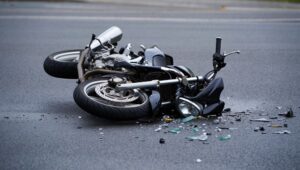
It matters significantly. The specific government entity responsible for maintaining the road where the crash occurred determines who the claim is filed against, what notice requirements apply, and what defenses the entity may raise. Filing against the wrong entity may delay or derail the claim entirely.
County Roads in Yellowstone County
Yellowstone County maintains a network of rural and suburban roads outside the Billings city limits. The county's road department is responsible for surface maintenance, grading, pothole repair, signage, and hazard mitigation on these routes. A motorcycle accident caused by a dangerous road condition on a county-maintained road may support a claim against Yellowstone County.
City Streets in Billings
Streets within Billings city limits fall under the city's jurisdiction. The city's public works department handles paving, repair, drainage, signage, and debris removal on municipal roads.
Rimrock Road, which runs through portions of both city and county jurisdiction depending on the specific segment, illustrates why identifying the correct responsible entity requires careful analysis. A crash at one location along Rimrock Road may involve the city. A crash a mile away may involve the county.
State Highways and MDT-Maintained Routes
The Montana Department of Transportation maintains state highways and federally funded routes. I-90 through Yellowstone County, along with various state-numbered routes, falls under MDT's maintenance jurisdiction.
A dangerous road condition on a state-maintained highway may support a claim against the state rather than the county or city.
An attorney handling a Montana motorcycle accident road hazard claim may need to determine jurisdiction before filing the required notice, because sending the notice to the wrong entity does not satisfy the legal requirement.
Filing a Claim Against a Government Entity in Montana
Claims against government entities in Montana operate under different procedural rules than claims against private parties. The most critical difference is the presentment requirement under Mont. Code Ann. 2-9-301. Before filing a lawsuit in district court, the injured person must first present a written claim to the appropriate government entity:
- For claims against the state, that means the Department of Administration.
- For claims against a political subdivision like Yellowstone County or the City of Billings, the claim must be filed with the clerk or secretary of that entity.
For claims against the state, the Department of Administration has 120 days to grant or deny the claim after it is presented. If the Department does not act, the silence is treated as a final denial, and the injured person may then proceed to file a lawsuit.
The statute of limitations is tolled during those 120 days for claims against the state, meaning the three-year filing deadline under Mont. Code Ann. 27-2-204 pauses while the government considers the claim. Filing with the wrong entity does not satisfy the presentment requirement.
Because jurisdiction over a single corridor, such as Rimrock Road, may shift between the city and the county depending on the specific segment, identifying the correct entity before presenting the claim is an essential first step.
What Evidence Helps Prove a Road Hazard Caused the Motorcycle Crash

Government entities have maintenance departments, inspection schedules, complaint logs, and internal records that document what they knew about road conditions and when they knew it.
That paper trail is the backbone of a Montana motorcycle accident road hazard claim, and it is also the evidence most at risk of disappearing as time passes.
The physical evidence at the crash scene and the documentary evidence in government files both require prompt action. Key evidence in a road hazard motorcycle accident claim includes the following:
- Photographs and video of the road hazard, the crash scene, the motorcycle's resting position, and any visible damage to the road surface were taken as close to the time of the crash as possible.
- The police report, which may document the road condition, note the presence of a hazard, or reference prior complaints about the same location.
- Maintenance and inspection records from the responsible government entity, obtained through public records requests filed before records are archived, reclassified, or routinely purged.
- Citizen complaint logs and prior accident reports at or near the same location, which may establish that the government entity had actual knowledge of the hazard before the crash.
- Weather data and road condition reports for the date of the crash, which may show whether the hazard was weather-related or the result of deferred maintenance.
- Testimony from other riders, drivers, or residents familiar with the road who may confirm that the hazard existed for a prolonged period before the crash.
The government entity is under no obligation to volunteer this information. Obtaining it requires records requests, preservation demands, and in some cases, litigation holds to prevent destruction of relevant documents.
Why Motorcycle Road Hazard Claims Against the Government Are More Difficult
Motorcycle accident claims involving road hazards are more complex when a government entity is involved. These cases follow different rules from standard personal injury claims and often require faster, more detailed action, making it important to work with a personal injury attorney in Billings who understands how to handle these unique challenges.
- Special filing requirements apply, meaning you must submit a formal written claim to the correct government agency before filing a lawsuit
- Shorter procedural deadlines can limit how long you have to take key steps, even if the overall statute of limitations is longer
- You must prove the government had knowledge of the dangerous condition, or should have discovered it through reasonable inspection
- Government agencies have strong legal defenses, including arguments about notice, maintenance standards, and comparative fault
Because of these added hurdles, building a successful claim often depends on early evidence collection and a clear legal strategy.
If you believe a road hazard caused your motorcycle accident, contact Yellowstone Law for a free consultation. Call (406) 606-6787 or reach out online to discuss your case—there’s no fee unless compensation is recovered.
Can a Motorcyclist Still Recover Damages if the Government Blames the Rider?
Montana's modified comparative negligence law under Mont. Code Ann. 27-1-702 applies to government liability claims the same way it applies to claims against private parties.
The government entity may argue that the motorcyclist was partly at fault — riding too fast for conditions, failing to avoid an obvious hazard, or not maintaining proper control of the motorcycle.
If the rider's fault does not exceed 50 percent, compensation is reduced proportionally but not eliminated. At 51 percent, recovery may be barred entirely.
Building a strong claim requires detailed evidence of the hazard, the government’s knowledge of it, and proof that the rider’s actions were reasonable under the circumstances, effectively countering the government’s attempt to shift blame.
FAQs: Government Liability and Motorcycle Accident Road Hazard Claims
Does the government have immunity from motorcycle accident claims in Montana?
Montana waived sovereign immunity for most tort claims through the Montana Tort Claims Act. Government entities may be liable for injuries caused by negligent maintenance, inspection, or design of public roadways. Certain exceptions and caps on damages exist, which is why understanding the specific framework before filing a claim matters.
What if the road hazard was caused by a private construction company, not the government?
A private contractor performing road work under a government contract may bear independent liability for hazardous conditions it created. The government entity that hired the contractor may also remain liable depending on the terms of the contract and the level of oversight it exercised. Both parties may be named in the same claim.
Can I file a road hazard claim if I was a passenger on the motorcycle?
A passenger injured in a motorcycle crash caused by a dangerous road condition may file a separate claim against the responsible government entity. The passenger's claim is independent of any fault that may be attributed to the motorcycle operator.
The same presentment requirement under Mont. Code Ann. 2-9-301 applies, meaning the passenger must also file a written claim with the correct entity before proceeding to court.
What if the road was marked with a "travel at your own risk" sign?
A general warning sign does not eliminate a government entity's duty to maintain safe roadways. The sign may become a factor in the comparative fault analysis, but it does not create blanket immunity for hazards that the government had a duty to repair, mark with specific hazard warnings, or eliminate.
How long does a government entity have to respond after I file the notice of claim?
For claims against the state, the Department of Administration has 120 days to grant or deny the claim after receiving it.
If the department does not respond within that period, the lack of response is treated as a final denial under Mont. Code Ann. 2-9-301, and the injured motorcyclist may then file a lawsuit in district court. The general three-year statute of limitations still governs the overall filing deadline.
A Road Hazard Claim Requires Fast Action and the Right Evidence

Government liability claims after a Montana motorcycle accident follow a different set of procedural rules and a different evidentiary burden than claims against a negligent driver.
The presentment requirement alone adds complexity that may catch injured riders off guard if they assume the process works the same as filing a standard personal injury claim.
Yellowstone Law offers free consultations for injured motorcyclists in Billings and throughout Montana. The firm works on a contingency fee basis, meaning you pay nothing unless Yellowstone Law recovers compensation on your behalf. Call (406) 606-6787 to speak with a Billings motorcycle accident lawyer about your road hazard claim.