Quick Answer: Who Is Liable in a Dooring or Right-Hook Bicycle Accident in Billings?
In most cases, the driver or vehicle occupant is liable if they opened a door or turned into the path of a cyclist without checking for traffic.
- Drivers have a legal duty to maintain a proper lookout
- “I didn’t see the cyclist” is not a valid defense
- Cyclists have the same right to the road as motor vehicles
- Liability may be shared in some cases, but drivers are typically responsible when they fail to yield or check before acting.
A Billings bicycle accident often comes down to a driver who failed to look before opening a car door or turning right across a bike lane. Dooring accidents and right-hook turns are two of the most common collision patterns on downtown Billings streets, and both raise the same core question: who is liable when the driver claims they never saw the cyclist?
Montana law treats bicyclists as vehicle operators with the same rights and duties as motorists. That legal standing is crucial because it means a driver's failure to check for a bicyclist before opening a door or executing a turn may constitute negligence, regardless of whether the driver "saw" the rider. A Billings bicycle accident attorney may use that legal framework to establish fault and protect an injured cyclist’s right to compensation.
Key Takeaways for Billings Bicycle Accident Claims Involving Dooring and Right-Hook Crashes
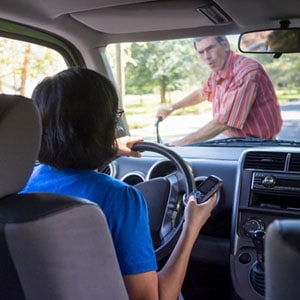
- A driver who opens a car door into the path of a lawfully traveling bicyclist may bear liability for a dooring accident under Montana negligence principles.
- Right-hook collisions occur when a driver turns right across a cyclist's path at an intersection or driveway, and the turning driver typically owes a duty to yield.
- Montana's modified comparative negligence law under Mont. Code Ann. 27-1-702 allows an injured cyclist to recover compensation as long as their fault does not exceed 50 percent.
- "I didn't see the cyclist" is not a legal defense against negligence; Montana law requires drivers to maintain a proper lookout for all road users, including bicyclists.
- Physical evidence, such as traffic camera footage, vehicle position, bike lane markings, and witness statements, may play a critical role in proving fault after a Billings bicycle accident.
Who Is Liable for a Dooring Accident in Billings?
A dooring accident happens when someone inside a parked or stopped vehicle opens a door directly into the path of an approaching bicyclist. On downtown Billings streets where parallel parking sits adjacent to travel lanes and bike routes, these crashes occur with little to no warning.
Why the Person Who Opened the Door Typically Bears Fault
Montana law requires vehicle occupants to check for approaching traffic before opening a door into a roadway. A person who opens a car door without looking for a bicyclist traveling in the adjacent lane or bike route may be negligent. The bicyclist riding in a lawful position on the roadway has no duty to anticipate that a parked car door might suddenly swing open.
The driver or passenger who caused the dooring crash is typically the liable party. In some cases, liability may also extend to the vehicle's driver if a passenger opened the door while the driver was still in control of the vehicle or had a duty to warn.
What Makes Downtown Billings Dooring Crashes Particularly Dangerous
Downtown Billings presents a concentrated mix of angled and parallel parking, delivery vehicles stopped in travel lanes, and cyclists riding along streets like Broadway Avenue and North 27th Street. Cyclists in these areas often ride close to parked vehicles because the lane width leaves limited room to create a buffer. A door opening at the wrong moment may send a cyclist into the adjacent travel lane, where a secondary collision with a moving vehicle may cause catastrophic or fatal injuries.
The tight geometry of downtown streets does not shift fault to the bicyclist. A rider traveling in the roadway in compliance with Montana traffic law is exercising a legal right, not taking an unreasonable risk.
Who Is at Fault in a Right-Hook Bicycle Accident?
A right-hook collision happens when a motor vehicle turns right directly across the path of a bicyclist traveling straight in the same direction. These crashes frequently occur at intersections and driveway entrances along busier Billings corridors, illustrating when these bicycle accidents most often occur, as drivers underestimate a cyclist's speed or fail to check their right-side mirror before turning.
How Right-Hook Violates a Cyclist's Right of Way
A bicyclist traveling straight through an intersection or along a roadway generally has the right-of-way over a vehicle turning right across their path. The turning driver has a duty to yield to through traffic, and that duty applies equally to bicyclists and motor vehicles. When a driver turns right without checking for a cyclist riding alongside or slightly behind the vehicle, the driver may bear liability for the resulting collision.
This pattern plays out regularly at signalized intersections in Billings, where drivers focus on oncoming traffic or pedestrians in the crosswalk while overlooking a cyclist approaching from behind and to the right. In similar intersection-related cases, a pedestrian accident lawyer in Billings may address claims involving injured pedestrians who were also affected by a driver’s failure to yield.
The Role of Bike Lanes and Road Position in Right-Hook Fault
A cyclist riding in a marked bike lane has a clear legal right to that space. A driver who crosses the bike lane while turning right without yielding to a cyclist already occupying it may face a strong negligence claim.
Even where no marked bike lane exists, Montana law permits cyclists to use the roadway under Mont. Code Ann. 61-8-605, and a cyclist riding as far right as practicable still has the right of way over a turning vehicle.
The phrase "as far right as practicable" does not mean "as far right as physically possible." A cyclist may legally ride farther from the curb when parked cars, debris, poor pavement, or narrow lane width make the far-right position unsafe. That positioning does not reduce the turning driver's duty to yield.
Can a Driver Be Liable Even If They "Didn't See" the Cyclist?
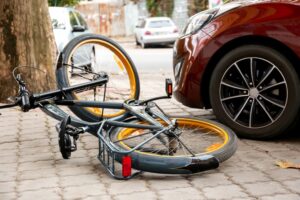
One of the most common defenses insurance companies raise after a Billings bicycle accident is that the driver simply did not see the cyclist. This argument sounds reasonable on the surface, but it fails as a legal defense under Montana negligence principles.
Montana's Duty to Maintain a Proper Lookout
Every driver on Montana roads has a legal duty to maintain a proper lookout for other road users. That duty includes checking mirrors before turning, scanning for cyclists before opening a vehicle door, and being aware of bicycle traffic in adjacent lanes. Failing to see a cyclist who was lawfully present on the roadway is itself evidence of negligence, not an excuse for it.
An insurance adjuster may try to frame the collision as unavoidable or suggest the cyclist appeared "out of nowhere." But a Billings bicycle accident lawyer familiar with these claim patterns may counter that argument by presenting evidence of the cyclist's position, speed, visibility, and compliance with traffic laws in the moments before the crash.
How Insurance Companies Use "I Didn't See Them" to Shift Blame
Beyond the initial defense, an insurance company may build on the "didn't see" argument by questioning the cyclist's visibility. Common strategies include:
- Arguing the cyclist was not wearing reflective clothing or bright colors, even during daylight hours, when no such requirement exists.
- Claiming the cyclist was riding too fast, even when traveling at a normal pace well within the flow of traffic.
- Suggesting the cyclist failed to make eye contact with the driver, as though eye contact is a legal prerequisite for right of way.
- Asserting the cyclist "came out of nowhere" by choosing a reference point that ignores where the cyclist was seconds earlier.
Each of these arguments seeks to inflate the cyclist's share of fault under Montana's comparative negligence system to reduce or eliminate compensation. That makes early evidence preservation critical.
What Evidence Helps Prove Fault After a Billings Bicycle Accident?
Establishing liability in a dooring accident or right-hook collision depends on physical, digital, and testimonial evidence that documents what happened and where each party was positioned at the moment of impact.
Traffic Camera Footage and Surveillance Video
Downtown Billings intersections and commercial properties may have cameras that captured the collision or the seconds leading up to it. This footage may show the vehicle's position, the cyclist's lane placement, the timing of a door opening or right turn, and whether the driver signaled or checked mirrors.
Footage may be overwritten within days or weeks, so requesting preservation early may make the difference between a provable claim and a disputed one.
Witness Statements and Police Reports
Bystanders, other drivers, and pedestrians who saw the crash may provide accounts that support or contradict the driver's version of events.
A police report filed at the scene documents the officer's initial observations, statements from both parties, and any citations issued. While a police report alone does not determine civil liability, it provides a factual baseline that an attorney may build on.
Physical Evidence at the Scene
Several types of physical evidence may help reconstruct a dooring accident or right-hook collision after the fact:
- The position of the vehicle door, turning angle, or final resting point of the car relative to the bike lane or travel lane.
- Skid marks, paint transfer, and scuff marks on the car door or vehicle panel indicate the point and angle of impact.
- The location of the bicycle and any debris field, which may reveal the cyclist's speed and direction at the moment of the crash.
- Road surface conditions, lane width measurements, and the presence or absence of bike lane markings at the crash location.
Photographs taken at the scene, even from a bystander's phone, may preserve these details before vehicles are moved and the road is cleared. An attorney may also work with accident reconstruction professionals to interpret physical evidence when the facts are disputed.
What Montana Law Says About a Cyclist's Right to the Road
Montana does not treat bicyclists as second-class road users. Under Mont. Code Ann. 61-8-602, bicyclists have the same rights and duties as operators of motor vehicles. That legal standing means a cyclist lawfully using a Billings street has every right to be there, and a driver who collides with that cyclist may not deflect liability by suggesting the cyclist did not belong in the roadway.
Does Montana Require Cyclists to Stay Far Right?

Montana law under Mont. Code Ann. 61-8-605 requires bicyclists to ride as far right as "practicable," but that standard includes broad exceptions. A cyclist may ride farther from the curb under several circumstances recognized by Montana law:
- Avoid the door zone of parked vehicles, where a suddenly opened car door may cause a dooring collision.
- Preparing to make a left turn at an intersection or into a driveway.
- Passing another cyclist, a pedestrian, or an obstruction in the roadway.
- Riding in a lane too narrow for a bicycle and a motor vehicle to travel safely side-by-side.
- Avoiding debris, potholes, drainage grates, or other hazardous road surface conditions.
These exceptions matter in dooring and right-hook cases. A cyclist who moved left to avoid a parked car's door zone was exercising reasonable caution, not violating the traffic law. A cyclist who occupied more of the lane at an intersection to remain visible to turning drivers was riding within the bounds of Montana law.
Nighttime Visibility Requirements
Montana law requires bicycles used at dawn, dusk, or night to have a front white light visible from at least 500 feet and either a rear red light or rear red reflector visible from at least 500 feet. Reflective material on the sides of the bicycle is also required.
Compliance with these requirements may eliminate an insurer's visibility argument entirely. Non-compliance may become a factor in the comparative negligence analysis, but it does not erase the driver's independent duty to maintain a proper lookout.
Billings Bicycle Accident Questions Answered by Montana Attorneys
What if the driver's insurance company contacts me before I talk to an attorney?
An insurance adjuster who calls shortly after a bicycle accident may request a recorded statement, ask broad medical authorization questions, or present an early settlement offer.
Anything said during those conversations may later be used to reduce the claim. An injured bicyclist has no obligation to speak with the at-fault driver's insurer and may direct all communication through an attorney.
How long do I have to file a bicycle accident claim in Montana?
Montana sets a three-year statute of limitations for most personal injury claims under Mont. Code Ann. 27-2-204. Property damage claims carry a shorter two-year deadline.
Evidence like traffic camera footage and witness memories deteriorates well before those deadlines arrive, so beginning the process early protects the strength of the claim.
May I recover compensation if the driver was partially at fault but claims I was too?
Montana's modified comparative negligence law under Mont. Code Ann. 27-1-702 allows an injured bicyclist to recover damages as long as their fault does not exceed 50 percent. Compensation is reduced by the cyclist's percentage of responsibility.
Insurance companies routinely inflate a cyclist's fault share to lower payouts, which is one reason thorough evidence collection matters from the very beginning.
Can a rideshare or delivery driver be held liable for a dooring or right-hook bicycle accident in Billings?
Rideshare and delivery drivers who frequently stop, open doors, and make sudden turns in downtown Billings traffic may create heightened risks for bicyclists.
A rideshare driver who opens a door to drop off a passenger without checking for an approaching cyclist may bear personal liability. Depending on the circumstances, a Billings personal injury attorney may evaluate whether the rideshare or delivery company's commercial insurance policy also applies.
What if a dooring accident or right-hook crash in Billings caused injuries that appeared days later?
Some bicycle accident injuries, particularly concussions, soft tissue damage, and internal bleeding, may not produce obvious symptoms immediately after the crash. Seeking a medical evaluation promptly after any bicycle collision creates documentation that connects delayed symptoms to the accident.
An insurance company may argue that a gap between the crash and the first medical visit means the injuries were caused by something else, so early medical records strengthen the link between the collision and the harm.
When a Driver Fails to Look, a Cyclist Pays the Price, But a Billings Bike Crash Lawyer Can Help

Dooring accidents and right-hook turns on downtown Billings streets happen because drivers fail to check for bicyclists before acting. Montana law places that responsibility squarely on the motorist. When that responsibility is ignored, the physical and financial consequences fall on the rider.
Yellowstone Law offers free consultations for injured bicyclists in Billings and throughout Montana. The firm works on a contingency fee basis, meaning you pay nothing unless Yellowstone Law recovers compensation on your behalf. Call (406) 606-6787 or contact our firm online to speak with a Billings bicycle accident lawyer about your claim.