
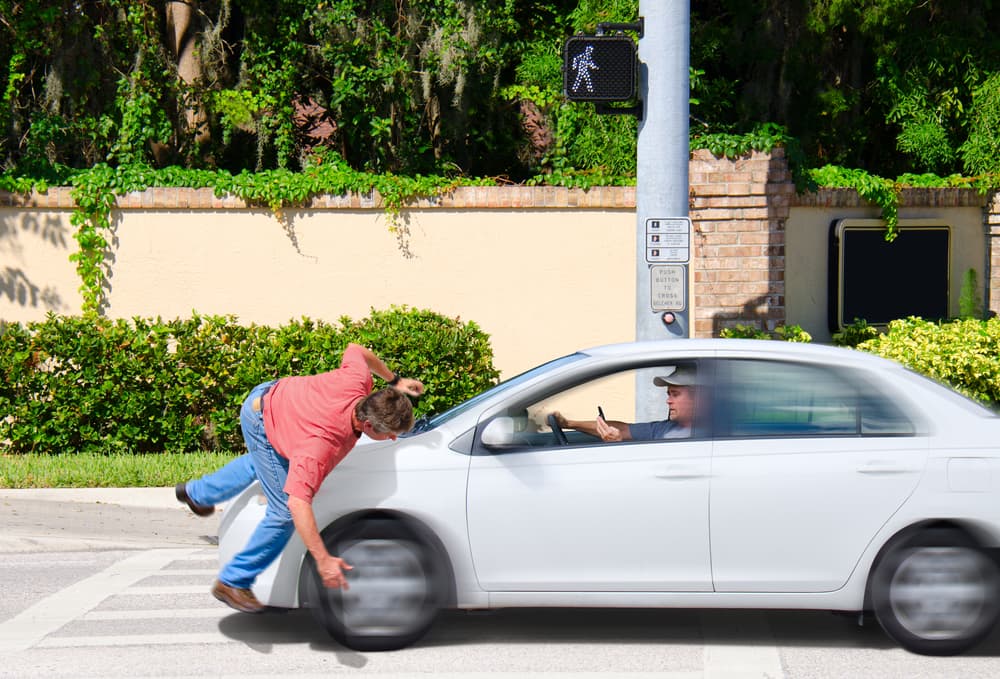
More than 7,314 pedestrians were killed and over 68,000 were injured in collisions with motor vehicles in one recent year, according to the National Highway Traffic Safety Administration (NHTSA). Despite the rise in autonomous vehicles and crash-avoidance technologies, accident rates continue to climb.
Pedestrian accidents often lead to hospital stays, long-term recovery, costly medical bills, and financial stress that hits just as hard as the physical pain. Yet many people who are hit by a car aren’t sure what to do next, or whether they have the right to take legal action.
If you’re asking, Can you sue someone for running you over?, you’re not alone, and you’re asking the right question. The answer depends on how the crash happened, who was at fault, and how the injuries have affected your life. If a driver acted carelessly or violated traffic laws, you may have a right to hold them accountable and seek compensation for what you’ve lost.
SCHEDULE FOR A FREE CASE EVALUATION
 Medical attention should always come first. If you’ve already sought care, you’ve taken the most important step.
But what if you didn’t feel injured right away and chose not to go to the hospital? Many pedestrians walk away from crashes thinking they’re fine, only to experience delayed symptoms like swelling, headaches, dizziness, or internal bleeding days later. A documented medical visit protects your health and your right to file a claim.
Once your recovery is underway and your health is stable, the next most important step is to talk with a personal injury lawyer. Here’s why:
A qualified attorney will help you preserve your claim, calculate your full damages, and fight for your full and fair compensation.
Not every accident results in a lawsuit. However, if the driver who hit you acted with negligence, recklessness, or malice, you may have a strong legal case. Many pedestrian accident lawsuits share some common ground. These are some situations that form the basis of many injury claims:
Negligence is often proven through a combination of police reports, eyewitness testimony, traffic camera footage, and expert accident reconstruction. An experienced attorney can gather and organize this evidence on your behalf.
Getting hit by a car can trigger multiple insurance claims, but figuring out who actually pays can be harder than you’d expect. The driver may not have enough coverage. Your own auto or health insurance may come into play. In some cases, a third party, like a commercial employer or property owner, could share the blame.
That’s why identifying every potential source of compensation is essential to securing a fair recovery because one policy alone may not cover everything you’ve suffered and lost.
Possible compensation sources include:
Compensation can include more than just your hospital bills. You may be entitled to recover lost income, rehab costs, pain and suffering, or loss of enjoyment of life. The total value of your case depends on your injuries, long-term recovery, and the facts surrounding the crash.
Many people hesitate to file a claim because they worry they were partly to blame. Maybe you were distracted, jaywalking, or wearing dark clothing at night. These factors may matter, but they don’t automatically disqualify you from receiving compensation.
Under Montana’s comparative fault law (Mont. Code Ann. § 27-1-702), you can still recover damages as long as you were less than 51% at fault. If your case qualifies, your compensation may be reduced by your percentage of fault, but it doesn’t vanish altogether.
Never assume you don’t have a claim. Working with an experienced pedestrian accident lawyer helps to safeguard your claim and maximize your potential recovery.
Pedestrian accidents often result in serious, long-lasting injuries. Unlike drivers or passengers, pedestrians have no protective barriers to absorb the blow of a collision. Even low-speed impacts can cause significant trauma.
Injuries that qualify for legal action include:
Even if your injuries seem minor at first, they may evolve into more serious conditions over time. If someone else’s negligence caused your pain, you shouldn’t have to bear the financial burden of your injuries.
A successful pedestrian accident claim may allow you to recover both economic and non-economic damages. These include tangible financial losses as well as harder-to-quantify injuries, including.
In cases involving reckless or intentional conduct. such as drunk driving, punitive damages may also be available. These are designed to punish the driver and deter similar behavior.
Every state imposes a deadline for filing personal injury claims. In Montana, the statute of limitations (Mont. Code Ann. § 27-2-204) is generally three years from the date of injury. If you wait longer, the court will likely dismiss your case, even if you have clear evidence.
There are exceptions. For instance, if the injured person is a minor or if the responsible party cannot be located right away, the clock may pause temporarily. But these are rare exceptions. Don’t assume you have more time than you do. A personal injury attorney can confirm the deadline based on your specific facts.
Filing a lawsuit after being hit by a car might sound intimidating, but the process doesn’t have to be confusing or drawn-out. Most pedestrian accident claims don’t go to trial. In fact, many resolve through insurance settlements. Still, knowing what to expect can help relieve some of the stress that comes with entering unfamiliar territory.
Filing a claim usually includes these key steps:
Throughout this process, your lawyer does the legal work while you focus on healing.
One of the most difficult situations occurs when the driver who hit you is uninsured or underinsured. While this may complicate your claim, you may still have options.
Alternative routes to compensation may include:
Your attorney will explore every possible recovery path to help you move forward financially.
What is the deadline for filing a pedestrian injury lawsuit in Montana?
In Montana, the statute of limitations for most personal injury claims, including pedestrian accidents, is three years from the date of the incident. This deadline can vary in rare cases, so it’s best to consult a lawyer as soon as possible.
What should I do after being hit by a car?
Seek medical assistance even if you feel ok. Some car accident injuries may not develop fully until days or weeks after the accident. Next, consult a lawyer before speaking with the driver’s insurance company. Your attorney will be your ally and advocate throughout the legal process, fighting to protect and maximize your claim’s value.
Can I still sue if I wasn’t in a crosswalk?
Yes. While crosswalks help your case, drivers must still exercise caution around pedestrians. You may still have a strong claim depending on the circumstances.
Do I need a lawyer to sue the driver?
Technically, no — but going without one can be risky. Insurance companies work hard to pay as little as possible. A lawyer increases your chances of getting fair compensation.
What if I already gave a statement to the insurance company?
That’s okay. Just avoid giving further details until you’ve spoken with a lawyer. Your attorney can handle future communications and correct any issues if needed.
How much is my pedestrian injury claim worth?
Every case is different. The value of your claim depends on the severity of your injuries, your medical bills, how long you’re out of work, and other damages. A lawyer can help estimate your claim’s full value.
What if I was hit while jaywalking?
You may still have a valid claim. While jaywalking may reduce your compensation under comparative negligence laws, it doesn’t automatically bar you from suing. Fault is based on the actions of both parties.
Can I sue if my child was hit by a car?
Yes. Parents or guardians can file a lawsuit on behalf of a minor child. In fact, children are often granted additional legal protections, and the statute of limitations may be extended in these cases.
How much does it cost to hire a pedestrian accident lawyer?
Most personal injury lawyers, including those at Yellowstone Law, work on a contingency fee basis. That means you pay nothing up front. Your lawyer only gets paid if they win your case or secure a settlement.
What if I don’t remember how the accident happened?
Memory gaps are common, especially in traumatic events. Police reports, witness statements, and surveillance footage can help fill in the details. An attorney can investigate thoroughly to build your case.
If you’ve been hit by a car and are unsure of your next steps, the team at Yellowstone Law is ready to help. With over 81 years of combined legal experience and more than $150 million recovered for injury victims, our attorneys know how to fight for what you deserve. We focus on personal injury law in Billings, Montana, and we treat every client with the care, honesty, and respect they deserve.
We’ve handled more than 2,000 injury cases, including complex pedestrian accidents, and we bring the resources needed to win. From negotiating with difficult insurance companies to presenting your case in court if needed, we’re prepared to handle everything for you.
Call us now at (406) 259-9986 or contact us online to schedule your free consultation.
Let Yellowstone Law help you recover and rebuild. You’ve been through enough — we’ll take it from here.

At Colton Holm Law Firm, we look forward to learning how we can help you resolve your legal concern.Call us today: (406) 259-9986